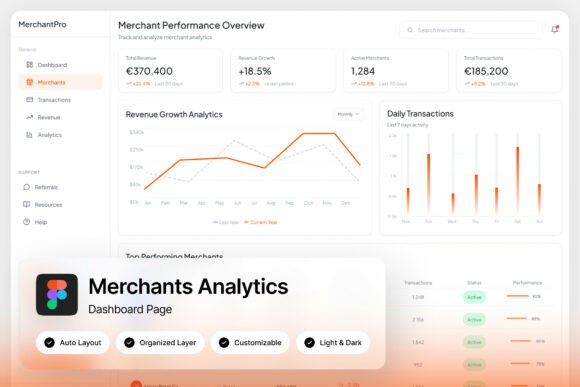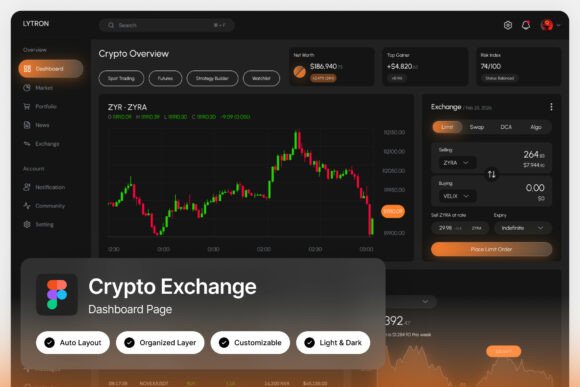
LYTRON Crypto Exchange Dashboard: A High-Energy UI for Active Traders
The LYTRON Crypto Exchange Dashboard is a powerful and visually striking user interface designed for cryptocurrency trading platforms. With its dark, high-energy aesthetic, it offers traders a focused and professional environment to manage their digital assets. The dashboard features candlestick charts, order book panels, asset price trackers, and portfolio analytics, all wrapped in a deep black and orange color scheme that exudes confidence and precision.
This UI is ideal for crypto exchange platforms, DeFi product teams, and blockchain UI designers who are looking for a modern, customizable, and pixel-perfect solution. Whether you're building a new trading platform or enhancing an existing one, the LYTRON dashboard provides a solid foundation for creating a seamless trading experience.
Understanding the Role of LYTRON in the Broader Process
The LYTRON Crypto Exchange Dashboard fits into the broader process of developing and maintaining a cryptocurrency trading platform. It serves as a critical component in the user experience (UX) design phase, helping to create a visually engaging and functional interface that supports real-time trading decisions.
Before launching a trading platform, teams often use tools like LYTRON to prototype and test different UI elements. During development, the dashboard can be integrated with back-end systems to ensure data accuracy and performance. After deployment, it continues to play a role in user engagement and satisfaction by providing a clean, intuitive interface for traders.
For DeFi projects, the LYTRON dashboard can be used to design interfaces for decentralized exchanges, lending platforms, and other blockchain-based services. Its flexibility allows developers to tailor the design to specific use cases while maintaining a consistent visual language across the platform.
How to Use LYTRON in Different Stages of a Project
When starting a new project, the LYTRON dashboard can serve as a reference point for designing a trading interface. By analyzing its layout and components, designers can identify best practices for organizing information, highlighting key metrics, and ensuring usability.
During the implementation phase, the dashboard can be customized to match brand guidelines, add specific features, or integrate with third-party tools. For example, developers can use the provided Figma file to modify the design and adapt it to their platform's requirements. The inclusion of free Google Fonts and well-organized layers makes this process efficient and straightforward.
After deployment, the LYTRON dashboard can be used as a benchmark for evaluating user feedback and making iterative improvements. By comparing user behavior with the design's intended functionality, teams can identify areas for optimization and enhance the overall trading experience.
Integration with Other Tools and Resources
The LYTRON Crypto Exchange Dashboard is designed to work seamlessly with a variety of tools and resources. It can be integrated with trading APIs, market data providers, and wallet services to create a fully functional trading platform. This integration ensures that users have access to real-time data, secure transactions, and accurate analytics.
For teams using design collaboration tools like Figma, the LYTRON dashboard provides a structured and editable file that simplifies the design process. The help guide included in the download package offers step-by-step instructions for customizing the dashboard, making it accessible even for those with limited design experience.
Additionally, the dashboard's light and dark mode interface makes it adaptable to different user preferences and environmental conditions. This feature enhances usability and ensures that traders can access the platform comfortably in various settings.
Practical Implementation Tips
To get the most out of the LYTRON Crypto Exchange Dashboard, it's important to plan your workflow carefully. Start by defining the key features and functionalities you want to include in your trading platform. Then, use the dashboard as a template to build a prototype that aligns with your goals.
When customizing the dashboard, focus on maintaining consistency in design elements such as color schemes, typography, and spacing. This helps create a cohesive user experience and reduces cognitive load for traders. Use the provided font links and layer organization to streamline the editing process.
Before finalizing the design, conduct usability testing with real users to gather feedback and identify potential issues. This step ensures that the dashboard meets the needs of your target audience and functions effectively in a live environment.
Workflow Examples and Observations
A common workflow for using the LYTRON dashboard involves the following steps: first, importing the Figma file into your design tool; second, customizing the layout to match your brand identity; third, integrating the design with your platform's backend systems; and finally, testing the interface with users to ensure it meets their expectations.
Another example is when a DeFi team uses the dashboard to design a decentralized exchange. They might start by analyzing the candlestick chart and order book panel to determine how to display real-time market data. Then, they could customize the portfolio analytics section to reflect the unique features of their platform.
Observations from using the LYTRON dashboard include improved user engagement, faster decision-making, and increased trust in the platform. Traders appreciate the clarity and speed of the interface, which helps them stay informed and react quickly to market changes.
Factors to Consider for Long-Term Use
When planning for long-term use of the LYTRON dashboard, consider factors such as scalability, maintenance, and updates. As your platform grows, you may need to expand the dashboard's functionality or make adjustments to accommodate new features.
Compatibility with different devices and browsers is also essential. Ensure that the dashboard works smoothly on desktop and mobile platforms, and that it supports the latest web standards. Regularly reviewing and updating the design helps maintain its relevance and effectiveness over time.
Finally, consider the importance of user support and documentation. Providing clear instructions and resources for users can enhance their experience and reduce the need for technical assistance. The help guide included with the LYTRON dashboard is a valuable resource for both designers and developers.